
The View From Five Years In

On building Mental Health & Resilience Group, the people who helped me get here, and the question I’m still asking.
By Dr. Lacey Rosenbaum
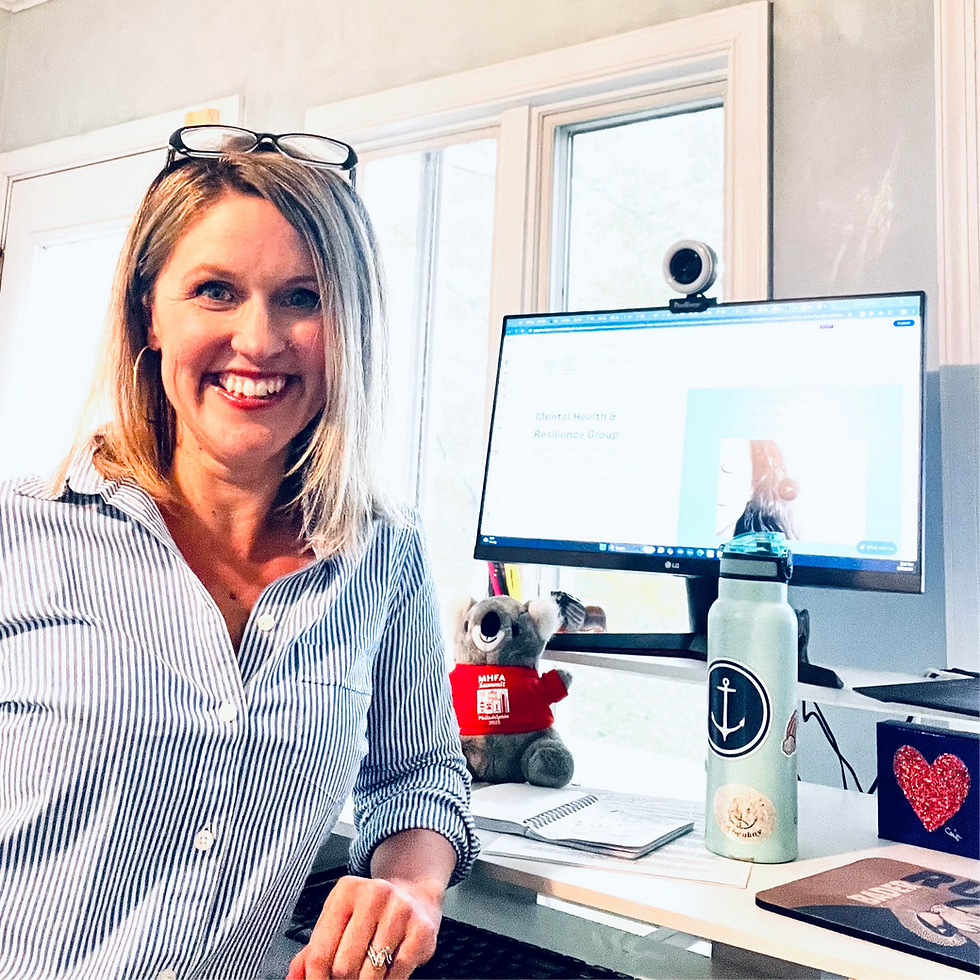
This is the view from my office, five years after I started Mental Health & Resilience Group.
At the one-year mark, I wrote about how thrilling and horrifying it felt to become my own boss. Looking around today, I’m thinking about why I took that leap—and all the people who helped me find my way.
I had left a full-time role doing work I believed in because I was completely burned out. My children were little. We were in the middle of a pandemic. I was trying to keep up with work and family life, practicing all the self-care I could think of, and wondering why none of it was bringing back the part of me that used to get excited about a new project.
I worried I had lost that part of myself.
What helped me through wasn’t more self-care. It was people. Heath, my family, friends, and mentors kept showing up for me. They reminded me that I still had something to give, even when I couldn’t quite see it myself.
I wanted to keep doing work I cared about. I also wanted to be there when my kids woke up and when they came home from school. Starting a business seemed like a way to try for both, though I had a lot to learn about how to actually run one.
My Google searches from that first year would probably make me laugh now. How do you build a website? How do you pitch a project? What exactly does an independent consultant do?
I asked trusted colleagues for advice. Some of the most memorable came from a group of badass moms who had become Mental Health First Aid National Trainers and consultants. They told me there were people out there doing this work with half my experience and half my doubts. “Don’t sell yourself short because you’re a woman and a mom,” they said. “Own what you know.”
I still felt the imposter syndrome. But they pushed me to do something every day that scared me a little: reach out to someone, ask a question, make a pitch, or say yes before I had figured out every detail. Their confidence in me helped me find a little of my own.
McKinsey & Company was one of the first organizations to give me a chance to do this work independently. I began working with its Mind Matters team during the COVID-19 pandemic, when they were thinking carefully about how to support employees who were struggling. They wanted people to have space to talk about what they were feeling, to check in on one another, and to know where to turn for help.
I helped develop learning programs that gave managers practical ways to recognize when an employee might be struggling and respond with care. I also helped create a Points of Contact program that prepares HR professionals to be approachable, informed sources of mental health support. It was meaningful work at a time when so many people needed it, and I’m still grateful to the team that trusted me and helped me find my footing.
Where the work has taken me
Over the past five years, I’ve worked with people in workplaces, schools, nonprofits, healthcare organizations, and communities. The projects have looked different: helping a global company strengthen mental health literacy and access to support; developing training and tools that others can use; supporting youth mental health programs; and helping organizations ask whether their efforts are making the difference they hope to make.
I’ve had the pleasure of working with partners including Our Minds Matter, the American Academy of Pediatrics, the Born This Way Foundation, Mental Health Collaborative, and school districts across the country. I’m grateful for what each has trusted me to do—and for what I’ve learned from the people doing the work every day.
Last year, I was honored to work with the North Carolina Department of Public Instruction alongside educators and school leaders who wanted to take trauma-informed and healing-centered practice further: into classrooms, across entire schools, and even throughout districts. They were asking a question I hear often: We believe in these ideas—but how do we bring them into our everyday work?
Together, we explored what that could look like in relationships, decisions, and the daily experience of students and staff. I love helping people make that connection between what they believe in and what they can put into practice.
At Programa Velasco, I’ve worked with an incredible leader who is deeply committed to doing right by the people in the organization. Staff well-being has never been a box to check. That commitment has made room for honest conversations about what people are carrying, what support they can count on, and what might need to change so they can keep doing work that matters to them. It’s meaningful to work alongside someone willing to ask those questions—and take the answers seriously.
Today, I spend most of my working time with the Ryan Bartel Foundation, where I serve as Program Director. It’s my current priority, and I’m grateful for the chance to work closely with teens, facilitators, schools, families, and community partners. Together, we’re building opportunities for young people to connect, feel that they belong, and discover what helps them through hard moments. The work brings me back, again and again, to what young people actually experience—and to how much care it takes to build something meaningful with them.
I also continue to train Mental Health First Aid instructors nationally through the National Council for Mental Wellbeing and support meaningful projects through the Consulting and Training Services Division. I believe in what can change when more people feel prepared to notice that someone is struggling, start a conversation, and help them find support. Through Mental Health & Resilience Group, I take on selected consulting, training, and speaking projects alongside these ongoing roles.
The question I keep coming back to
In that first anniversary post, I wrote that I practiced all the self-care I could, but community care pulled me through.
Five years later, I think about that line a lot.
I’ve met so many people who care deeply about their work: educators, caregivers, mental health professionals, nonprofit staff, and leaders trying to support their teams while carrying themselves. They deserve useful tools for caring for their well-being. They also deserve reasonable expectations, colleagues they can lean on, leaders who listen, and systems that make it possible to get help.
A walk can help. A boundary can help. Sometimes both are exactly what we need that day. But neither can create more staff, make childcare affordable, or fix a workload that has been impossible for years.
So the question I keep coming back to is: How do we sustain the people doing the good work?
I don’t have a neat answer. I’m still asking what support looks like for an individual, a team, and an entire organization—and how we make it something people can actually feel in their day-to-day lives. The people I’ve worked with have helped me ask better questions and try practical things together.
What five years have given me
Starting this business did give me more time with my kids. I’ve been there for more mornings and afternoons, including many ordinary ones that I might once have hurried through. I’m grateful for that. I’m also grateful that the work still gives me reasons to learn, make connections, and get excited about what’s possible.
None of this has been a solo accomplishment. People took a chance on me. They shared referrals, showed me the ropes, invited me into their organizations, trusted me with hard questions, and stayed in touch. My family made room for me to build something. The people I’ve worked alongside have shaped what Mental Health & Resilience Group is becoming.
At one year, I wrote about wanting my kids to dream big, be vulnerable, and create a life they wanted. I’m still figuring out what that looks like for me. Five years in, I’m glad I tried.
Thank you to everyone who has been part of these first five years. You took a chance on me, shared your wisdom, made an introduction, or simply reminded me I could figure it out. I haven’t forgotten it.
If you’re thinking about making a big career leap of your own, please reach out. I’m happy to pass along the wise advice friends and mentors gave me—and share the highlights and low points along the way. I can even share a few things I learned after Googling “what do consultants actually do?”
And if you’re thinking about mental health, burnout, or how to sustain the people at the heart of your organization, I’d love to hear what questions you’re asking. You can learn more about my speaking, training, facilitation, and consulting at Mental Health & Resilience Group.


Comments